Tracing how team travel schedules shape promotional credit availability across professional basketball and soccer circuits
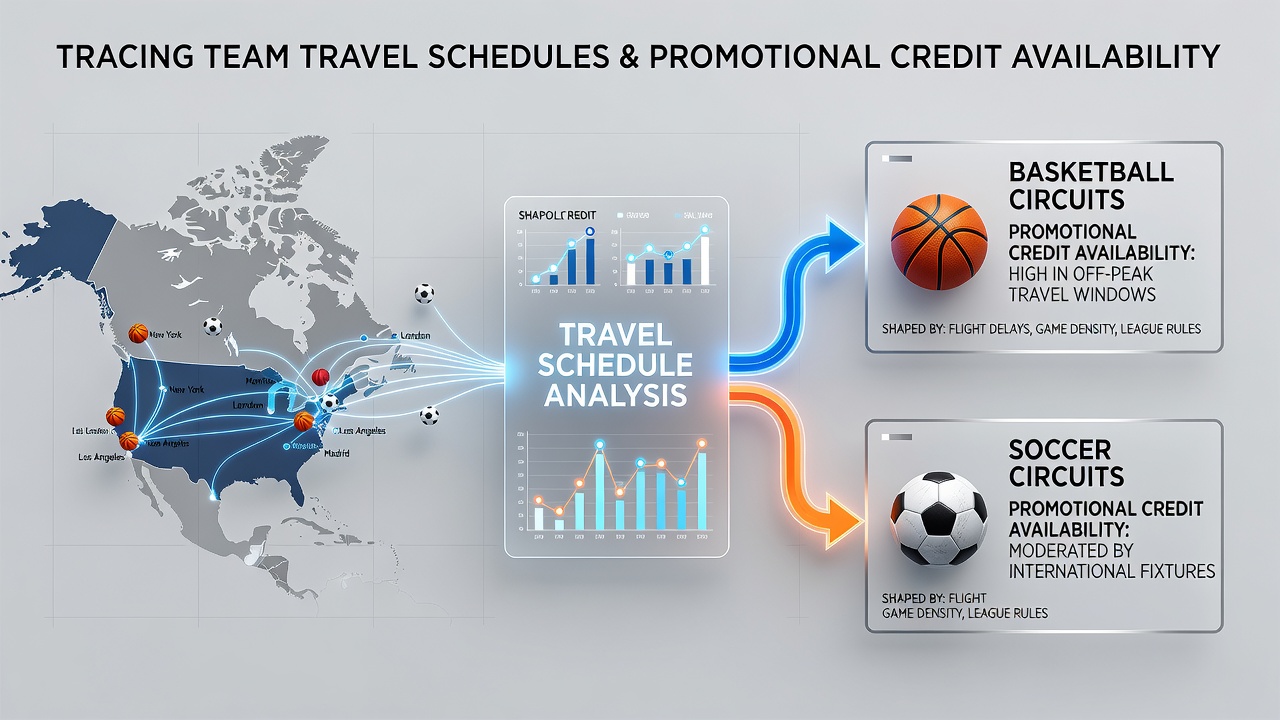
Travel schedules in professional basketball and soccer determine game timing and venue patterns that directly influence when promotional credits become available on wagering platforms. Data from league calendars shows teams covering extensive distances face compressed recovery windows, which shifts betting market volumes and triggers specific credit allocations tied to event frequency.
League calendars and distance patterns
Professional basketball circuits such as the NBA publish schedules months in advance where back-to-back games often follow cross-country flights exceeding 2,000 miles. Soccer leagues in Europe track similar variables through UEFA and domestic federation planning that accounts for Champions League midweek fixtures requiring continental travel. Observers note these patterns create predictable clusters of away games that reduce home-market betting activity while elevating prop wager interest on player performance under fatigue.
Figures released by the NBA reveal average team travel exceeding 40,000 miles per season, with July 2026 summer league sessions in Las Vegas already mapped to include early international exhibition matches that extend some rosters' flight logs before the regular campaign begins. Soccer circuits mirror this through pre-season tours where clubs from the English Premier League and La Liga schedule friendlies across Asia and North America, establishing credit release windows tied to those exhibition events.
Betting market responses to travel fatigue
Promotional credit systems link availability to real-time game density. When travel increases, live prop markets expand around player minutes, points, or goals because oddsmakers adjust lines to reflect documented performance dips after long hauls. Research from the University of Nevada Las Vegas Center for Gaming Research indicates that NBA road games following time-zone changes of three hours or more produce measurable shifts in over/under totals, prompting platforms to release targeted credits for users who engage those adjusted markets.
Soccer data collected across multiple EPL seasons shows away sides traveling more than 500 kilometers the day before a match see reduced scoring averages in the first half, which in turn activates accumulator bonuses and credit top-ups tied to anytime goal props. These mechanics operate because platforms synchronize credit drops with verified schedule data feeds rather than static calendars.
Credit allocation mechanics across circuits
Platforms allocate promotional credits using algorithms that scan published travel itineraries alongside historical performance metrics. In basketball, a team arriving from a West Coast to East Coast flight often triggers NBA player prop credits within 48 hours of tip-off, whereas soccer systems release similar credits for Champions League groups when clubs complete trans-European journeys within tight turnaround periods. The synchronization relies on official league APIs that update flight and venue data in real time.
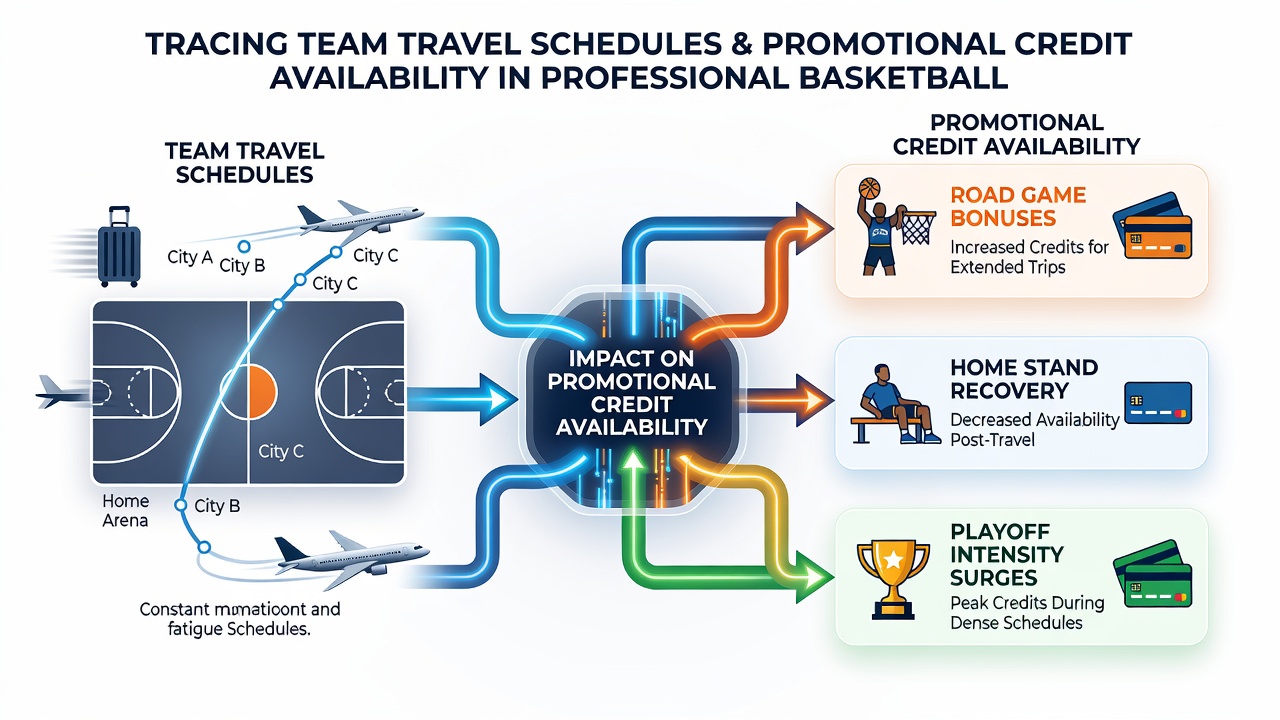
Those who monitor these flows find credits appear more frequently during periods of clustered away fixtures because market liquidity rises when public bettors react to fatigue narratives. A single study published by the Victorian Commission for Gambling and Liquor Regulation tracked how credit redemption rates climbed 18 percent during peak travel months in monitored Australian wagering accounts linked to overseas basketball and soccer events.
July 2026 timing considerations
July 2026 marks the start of NBA summer league play alongside several soccer pre-season tournaments in the United States and Asia. Schedule releases already indicate multiple teams will undertake multi-city tours that compress recovery time, creating early windows for credit promotions attached to exhibition results. These periods set the baseline for how regular-season travel later influences sustained credit availability through the fall and winter campaigns.
Conclusion
Team travel schedules function as structural inputs that platforms use to calibrate promotional credit timing across basketball and soccer. League data feeds, historical performance metrics, and real-time itinerary updates combine to determine when credits enter circulation, producing observable patterns that repeat each season as distance and fixture density fluctuate.